
Summer solstice – what is it, when does it fall, and what rituals are worth performing?
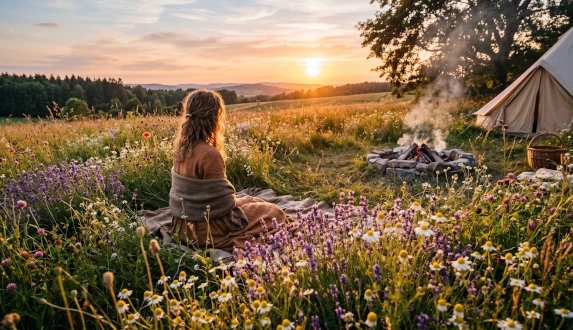
This exceptional moment of the year is approaching, when light finally triumphs over darkness, and the nature around us positively vibrates with the fullness of life. The summer solstice has fascinated humanity for millennia, awakening in our ancestors a deep need to celebrate, give thanks for abundance, and... do a little bit of magic! It is a magical time when the boundary between everyday life and spirituality blurs.
Are you wondering what secrets lie behind this cosmic phenomenon? In this article, we will take a closer look not only at the astronomical side of this event, but we will also discover what extraordinary rites are worth weaving into your everyday life. We will talk about ancient traditions, explore what the famous Kupala Night entails, and point out practical ways to celebrate the brightest days of the year. If you are looking for inspiration and want to awaken the energy of summer within yourself, make yourself comfortable – and for a solid dose of magical accessories needed for your practices, we invite you to our shop Aromantra.com. Let's begin our journey towards the sun!
Summary:
- Summer solstice – what is it?
- Kupala Night and midsummer night – what are they and how do they differ?
- Summer solstice – rites and traditions
- Summer solstice rituals – what is worth doing?
- How to celebrate the longest day of the year?
- Why is it worth celebrating the summer solstice?
Summer solstice – what is it?
Before we fully immerse ourselves in magical practices and esoteric secrets, it is worth looking at this fascinating phenomenon from a more grounded perspective. Searching for an answer to the question: what is the summer solstice exactly, we must raise our eyes to the sky for a moment and recall the basics of astronomy. This extraordinary event is the moment when the Sun reaches its highest point in the sky (relative to the equator) during its annual journey. It is exactly then that we solemnly and joyfully welcome the astronomical summer in our hemisphere. But how does this precise, cosmic mechanism work in practice, and what does it mean for us – the inhabitants of Earth?
What is the summer solstice and why is it the longest day of the year?
Everything is down to the tilt of our planet's axis. The Earth, spinning in its cosmic dance around the Sun, is slightly "tilted". At a certain point in the year, the Northern Hemisphere leans maximally towards our life-giving star. If you are wondering when is the summer solstice, it usually falls between the 20th and 22nd of June. The exact date depends on the leap year and subtle changes in the Earth's orbit. Because our part of the globe is then most strongly exposed to solar rays, we experience the phenomenon that is the longest day of the year.
During this time, the Sun envelopes us with its light for over a dozen hours, literally charging our internal batteries to the full. From a scientific point of view, this is merely an arrangement of planets and stars. However, our ancestors perfectly sensed this powerful vibration – they saw in it living proof of the power of nature's forces, vitality, and cosmic harmony that is well worth celebrating.
🔍 Worth knowing: Although we joyfully welcome summer and the longest days, it is worth remembering that the Universe always strives for balance. When we celebrate the fullness of the sun, the inhabitants of the Southern Hemisphere (e.g., in Australia or Argentina) experience the winter solstice – for them, the darkest and longest night of the year begins!
The shortest night of the year – what does the summer solstice symbolise?
When the Sun, after a long journey across the firmament, finally slowly hides behind the horizon, the shortest night of the year begins. In the world of broadly understood esotericism and spirituality, the summer solstice – known in many pagan traditions and Wicca by the beautiful name Litha – is an incredibly powerful symbol of the ultimate victory of light over darkness, the triumph of life over death, and warmth over the gloom. It is the absolute peak of the energetic wave – a moment of full expansion, in which intentions, dreams, and goals sown early in the spring begin to yield their first, tangible crops.
However, within this joyful time also lies a profound lesson in humility. Paradoxically, this peak point of light's dominance is simultaneously the herald of its slow fading. From this moment, until winter, the days will begin to grow shorter. Nature thus reminds us of the inevitable law of cyclicality.
"The magic of the summer solstice teaches us that just as the Sun constantly dances in the sky, we too are subject to eternal cycles of growth, blossoming, rest, and renewal. Let us celebrate the light, maintaining respect for the coming shadows."
The meaning of the summer solstice in ancient beliefs and today
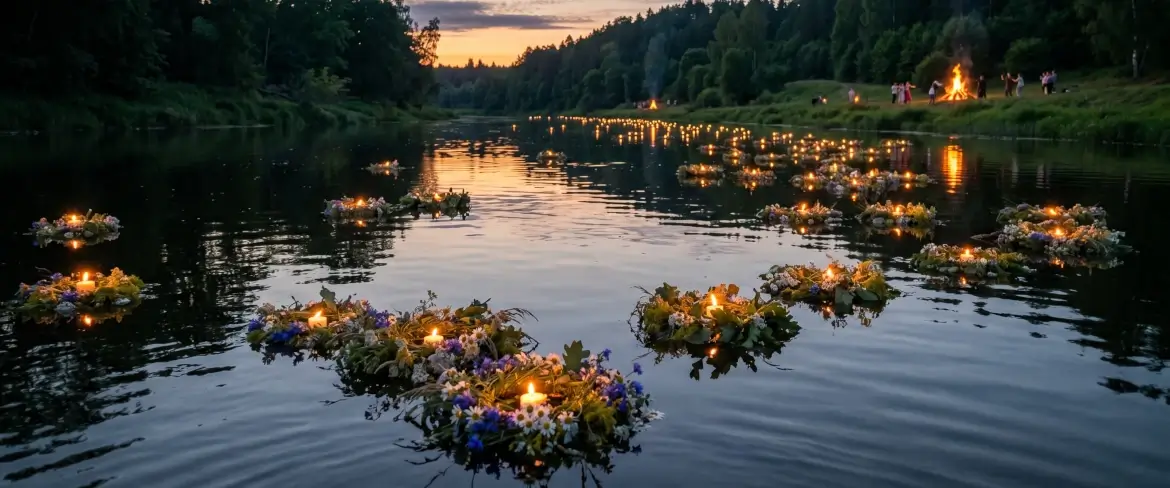
Since the earliest times, the moment the sun passed through its zenith was revered by almost all cultures in the world. Particularly close to our Slavic roots are the joyful, wild, and sensual magical celebrations associated with this time. If you type the query what is kupala night into a search engine today, you will discover tales of an ancient festival uniting fire, water, herbs, and love. Our ancestors gathered around huge bonfires, jumped through the crackling flames to cleanse their soul and body, and maidens floated wreaths woven from wild flowers onto the waters of rushing rivers, divining their romantic future from them.
Although today we rarely have the opportunity to dance barefoot around a bonfire in the middle of a big city, the primal energy of the summer solstice is still alive within us! Contemporary spiritual practices, esotericism, and the conscious self-care movement draw heavily from this beautiful, ancient wisdom. How do we awaken the magic of this time today?
- 🔥 Working with the element of fire: instead of a huge bonfire in a clearing, we light natural candles in the comfort of our homes with the intention of cutting off what no longer serves us, and attracting life-giving energy.
- 🌿 The power of plants and cleansing: burning incense (such as sage, cedar, or palo santo) allows us to connect with the spirit of plants exactly when they have the most vital power.
- ✨ Mindfulness and working with crystals: the solstice is an ideal time for meditation, giving thanks for abundance, and charging your favourite stones (e.g., citrine, jasper, or sunstone) in the glow of the rising or setting summer Sun.
This is just the prelude to our magical summer! Now that you know what this exceptional time is from an energetic point of view, let's get down to specifics and see how ancient traditions seamlessly blend with modernity.
Kupala Night and midsummer night – what are they and how do they differ?
June is a month in which magic literally lingers in the air, and two incredibly important, summery dates appear on the calendar. Very often we throw them into one bag, but is it right? Many people seeking spiritual inspiration wonder what is Kupala Night and how does it differ from midsummer night? Although both celebrations share a multitude of joyful rites and rely on identical symbolism vibrating with elements, their origins and the exact time of celebration are slightly different. Let's untangle this historical-spiritual knot together!
Kupala Night – what kind of festival is it and what are its roots?
Kupala Night, known in many regions also as Sobótka, is an ancient, pre-Christian Slavic festival. Its celebrations were strictly connected with the primal rhythm of nature and fell exactly on the astronomical summer solstice – that is, the shortest night of the year (most often from the 20th to the 21st or from the 21st to the 22nd of June). For our ancestors, it was a time of absolute freedom, wild joy, and the celebration of broadly understood fertility – both literal, romantic, and the harvest in the fields.
The Slavs then worshipped the two most powerful elements: fire and water, deeply believing that it was they that had the greatest power to cleanse and renew vital energy. When pondering what Kupala Night is in its original meaning, imagine fascinating, ritual barefoot dances on the grass, singing until the break of dawn, and mythical searches for the legendary fern flower. According to legends, this plant bloomed only on this one, single night, and was supposed to provide the person who found it with infinite wealth, profound life wisdom, and inexhaustible happiness.
Midsummer night – Christian tradition versus Slavic rites
When Christianity arrived in Slavic lands, eradicating pagan traditions so deeply rooted and beloved by the local people turned out to be an almost impossible process. Instead of drastically forbidding the joy, the Church decided to cleverly adapt the Sobótka rites and give them a new religious dimension, consistent with dogmas. This is how midsummer night was born, always celebrated on the eve of St. John the Baptist's day, that is, from the 23rd to the 24th of June.
Saint John, as the patron of waters and baptism, fit perfectly into the ancient Slavic water cult. Instead of pagan, free cleansing in rivers and lakes, official blessing of the waters by priests was introduced. It was believed that only after this act did water demons, drowners (utopce), and water spirits lose their power, which was supposed to ensure safe bathing for the rest of the summer. In this way, ancient natural beliefs neatly intertwined with the new religion, creating a unique cultural mishmash that we can enjoy to this day.
The shortest night of the year – common elements of both festivals
Despite technical and calendar differences – after all, both dates are usually separated by only two or three days – in the minds of many of us, these celebrations have merged into one extraordinary event. Regardless of whether natural, pagan Kupala or midsummer night is closer to your esoteric heart, their energetic core remains unchanged. It is a great, joyful festival of fire, water, love, and the powerful magic of cleansing! What really connects both traditions in practice? Although the celebrations and intentions have evolved over the centuries, their main foundation has remained unchanged – the powerful forces of nature. Let's see how these same elements intertwined in both of these festivals:
- 🔥 the power of fire: during Kupala Night, huge bonfires were lit, which people jumped over to cleanse their aura, gain fertility, and burn away evil. The Christian tradition, in turn, smoothly adopted this custom – pagan bonfires turned into so-called "St. John's fires" (or sobótki), which were meant to protect homesteads and crops from bad weather, and their glow was often dedicated to St. John himself;
- 💧 the magic of water: in Slavic beliefs, free night-time bathing in rivers was meant to literally wash away illnesses from people and add vitality. In the tradition of midsummer night, this same element played an equally important role, but it was "tamed" – it was believed that only the official blessing of water by a priest drove away evil demons (drowners) from it and opened a safe season for summer bathing;
- 🌿 herbs and wreaths: the ancient Slavs gathered magical plants at dawn, from which young maidens wove wreaths and floated them on rushing water, divining their imminent marriage. The Church adapted the power of plants, introducing the blessing of herbs for protection against evil spells. The ancient love custom turned out to be so strong, however, that it survived in an almost unchanged form, and the wreaths woven during midsummer night have been preserved as a beautiful, romantic symbol.
📌 Summary of the most important differences
Although Kupala Night and midsummer night are technically two different holidays, they are united by the same magical intention of celebrating life:
- Kupala Night: a pagan (Slavic) festival, it has a movable date – it always falls on the astronomical summer solstice, which is the shortest night of the year.
- Midsummer night: a Christian holiday, it has a fixed date – it always falls from the 23rd to the 24th of June (the eve of St. John).
Remember that both of these nights are an absolutely ideal moment for practices related to the elements, conscious cleansing of your space, and opening your heart to new, life-giving energy!
Summer solstice – rites and traditions
When the Sun reaches its zenith, and the days seem to drag on endlessly, the boundary between the material and spiritual worlds becomes extremely thin. During the summer solstice, ancient rites were essentially a great, sensual tribute paid to nature in its most blossoming, lush form. Our ancestors did not need complicated magical books – their temple was a dense forest, their altar a flowery clearing, and their tools were what Mother Earth generously gave them. Let's take a closer look at this extraordinary, vibrant tradition that still awakens the call of nature in us today!
Fire, water, and herbs – symbols of the summer solstice
Most magical paths are based on deep work with the elements, and the longest day of the year is the moment when their vibrations reach their absolute apogee. The three main pillars of June celebrations are fire, water, and the gifts of the earth in the form of plants. Each of these elements carried a specific intention and energy:
- 🔥 fire (transformation and strength): it symbolised the life-giving Sun, burned away the negative, and protected against evil powers. The bonfires lit on this evening were meant to add vitality for the rest of the year. If you feel that this is the element that resonates most strongly with you and you want to introduce its magic into your everyday life, discover the "Fire" category in our shop, where you will find ritual accessories to ignite your inner spark;
- 💧 Water (cleansing and emotions): water during this time acquired miraculous, almost healing properties. Night-time baths symbolised washing the soul, washing away old worries, and entering a new stage with a clean slate. For those who wish to surround themselves with this soothing energy every day, we have created a space dedicated to the element in the "Water" category;
- 🌿 Herbs (healing and magic): this is the quintessence of the element of Earth. It was believed that plants picked during the solstice have double power! Natural infusions can complement your magical practice. We invite you to our "Herbs" section, where aromatic lemon balm, soothing chamomile, mystical lavender, and many other gifts of nature, ideal for summer rituals, await you.
Wreaths and midsummer night – the meaning of love rituals
If we were to point out one, the most iconic and romantic image associated with the June celebrations, it would certainly be a wreath slowly floating on the dark surface of a river, illuminated only by the glow of a small candle. When midsummer night arrived, young, unmarried women meticulously wove into their wreaths not only wild flowers and magical herbs, but above all, dreams of love hidden deep in their hearts.
Floating wreaths on the water was one of the most important divinations. Watching them drift down was associated with huge emotions! If the wreath floated evenly and smoothly, it heralded a quick and happy marriage. If it sank or got tangled in the rushes – sorrows or spinsterhood awaited the girl. The greatest joy erupted, however, when the wreath was fished out of the water by a bachelor hidden in the thicket. Such a turn of events meant that the young ones (even if they knew each other before and the whole "coincidence" was carefully arranged) could become a couple without obstacles.
Ancient Slavic rites associated with Kupala Night
Before midsummer night took on its somewhat more orderly character, the Slavic Kupala Night resembled a wild, uninhibited festival of vitality. As soon as the first stars appeared in the sky, real madness began, in which the senses, dances, and the inseparable roar of flames played the main role.
One of the most popular rituals for Kupala Night was jumping over a bonfire. Women and men grabbed each other tightly by the hands and took a run-up. It was believed that if a couple jumped over the fire without letting go of their hands, their love would be lasting, loyal, and resistant to all adversities of fate. Jumping also had a purely cleansing dimension – the fire literally "burned" illnesses, evil spells, and bad thoughts out of the bodies.
🌿 The search for the legendary fern flower
We cannot talk about Kupala Night without mentioning the legendary fern flower. According to legends, this magical plant bloomed only on this one, shortest night of the year, shining in the darkness with an extraordinary, magical glow. The daredevil who managed to find it was to gain superhuman wisdom, wealth, and the gift of seeing hidden treasures. In reality, trips to the dark forest to search for the fern were a perfect excuse for young couples to slip away from the watchful eyes of the elders and spend time alone among the rustling trees.
The entire Kupala Night was accompanied by loud singing, drum beating, and sensual barefoot dances on the dew. It was a moment when humans became one with the cycle of nature, drawing strength from it for the entire upcoming autumn and winter. Although our lives look completely different today, we can still invite this beautiful energy under our roof!
Summer solstice rituals – what is worth doing?
When the sunlight reaches its absolute maximum, and nature pulsates with life, the boundaries between the earthly and the vibrational and magical blur. No wonder that esoteric practices attract just as strongly today as they did centuries ago! However, you do not have to live in the backwoods or look for a real fern flower in the dark thickets at midnight to feel this extraordinary power. All you need is the right intention and a few proven tools to create a space full of supportive energy around you. Are you wondering what summer solstice rituals are worth performing? We have prepared a practical summary for you!
Summer solstice rituals supporting intentions and energy
The longest day of the year is a moment of full expansion. It is an ideal time to sit in peace, take a deep breath, and think about what you want to "grow" in your life over the coming months. When practising during this time, focus on light, growth, and abundance.
- ✔️ Writing down intentions: take a piece of paper and write down your goals, dreams, and things you feel grateful for. The solstice brings with it powerful manifestation energy – it is worth putting these thoughts on paper exactly when the Sun is highest in the sky.
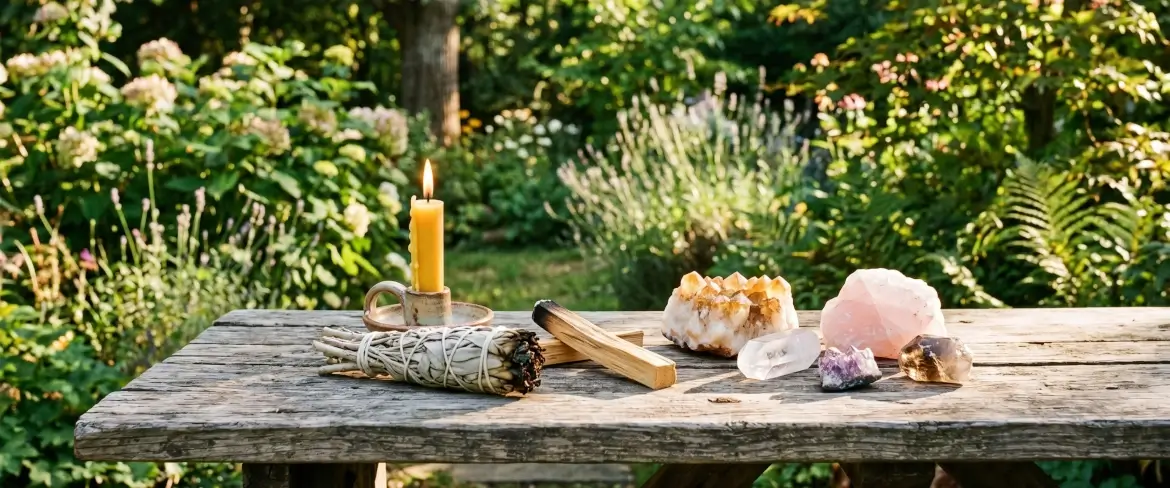
- ✔️ Working with the element of fire: light a candle in a yellow, gold, or orange colour (symbolising the sun and life force). Speak your intentions aloud, and then let the flame work. You can find a wide selection of tools for fire magic in the "Candles" category in our shop.
- ✔️ Cleansing the space: this is a great moment to remove energetic stagnation from your home. Reach for proven, natural incense – such as white sage, palo santo, or bunches of herbs – and with the intention of introducing light, walk through all the rooms with the aromatic smoke.
- ✔️ A sunbath for minerals: if you work with the energy of stones, expose them to the summer rays. The sun will wonderfully charge citrine, tiger's eye, or carnelian. If you are just building your magical collection, take a look at the "Stones and crystals" section to find the perfect mineral for this summer.
Kupala Night rituals – cleansing, love, abundance
The Slavic tradition is a real mine of inspiration. During Kupala Night, rituals in the past were based on wildness and tangible contact with the elements. How to transfer them to your own, contemporary practice when we do not have a rushing river and a clearing for a huge bonfire at hand? It is worth dividing them into three main pillars. Effective Kupala Night rituals are those that are consistent with your current goal:
- ✔️ cleansing – in the past, people bathed in streams to wash away the bad. Today, prepare yourself a magical bath in the tub! Add Epsom salt, a handful of dried herbs (e.g., calendula and lavender), and a few drops of essential oil to the water. Visualise the water drawing all the stress out of your body;
- ✔️ attracting love: – you don't have to throw a wreath into the river. Instead, create a personal love amulet. Put rose petals, a piece of rose quartz, and a mint leaf into a small, pink bag. Tie it with a red thread and wear it close to your heart or put it under your pillow;
- ✔️ prosperity and abundance – Kupala Night is the beginning of the summer harvest. Bury a small coin in a pot with your favourite flower with the intention of financial growth, or create an abundance jar filled with sunflower seeds, rice, and a cinnamon stick.
Midsummer night rituals – tradition in a modern edition
In turn, the celebrations associated with St. John's Eve can be treated as an excellent excuse to protect our home. Traditional midsummer night rituals focused very heavily on protective magic and broadly understood herbalism, believing that June plants have the powerful ability to ward off evil spells.
How to weave this into a modern lifestyle? You can make your own symbolic protective bouquet. Combine a few sprigs of St. John's wort, mugwort, or simply the herbs you happen to have on hand. Tie them with a natural string and hang them above the front door to your apartment. According to beliefs, such an herbal guardian will protect household members from bad energy and the negative intentions of guests.
And what about the famous wreaths? Floating them on the water in the centre of a large city can be difficult (and not always eco-friendly), but weaving them itself is a wonderful form of mindfulness! Buy a handful of wildflowers at the market, sit comfortably with a mug of herbal infusion, and slowly weave a wreath, intertwining good thoughts into it. You can wear it during your evening meditation, and dry it the next day as a souvenir of this exceptional, summery time.
How to celebrate the longest day of the year?
Magic is not just intricate spells, ancient incantations, and complicated rites. The longest day of the year is also a time of deep joy and celebration of our everyday, ordinary existence. Moving from strictly esoteric practices to a more lifestyle approach helps us integrate this joyful, vibrating energy of summer at our own pace. Celebrating does not have to require many hours of preparation. Often, it is the smallest, but fully conscious gestures that bring us the most solace and allow us to tune into the natural rhythm of the Universe.
Simple rituals for the longest day of the year
If you lack time for elaborate ceremonies or simply prefer subtler forms of spirituality, opt for micro-practices. Choose from the list below what resonates with you the most right now:
- ✔️ a sunset walk – go for a short stroll at the moment when the Sun slowly leans towards the horizon. Let the warm, golden rays envelope your face and for a few minutes in silence express gratitude for everything that has happened to you in the past half-year;
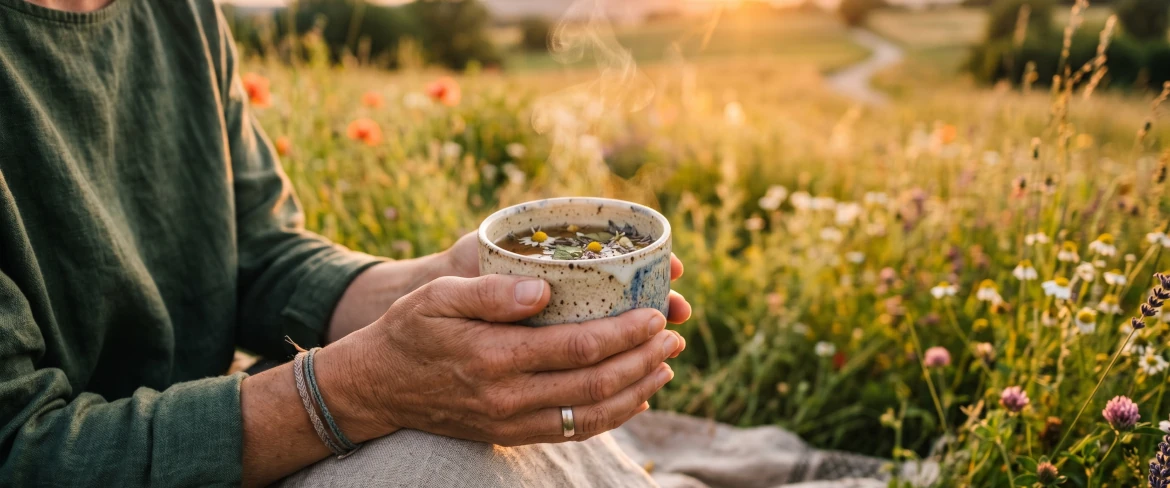
- ✔️ a herbal bath or infusion – don't have a bathtub to take a ritual bath? No worries! Brew a mug of tea from herbs associated with the sun and summer, such as chamomile, lemon balm, or St. John's wort. Drink it slowly, visualising how the life-giving force spills throughout your entire body, charging it from within;
- ✔️ lighting a candle – when the longest day of the year comes to an end and dusk falls, light a natural candle on the windowsill or balcony. It is a beautiful, symbolic gesture of prolonging the sunlight and inviting good energy under your roof.
Contact with nature as a form of celebrating the summer solstice
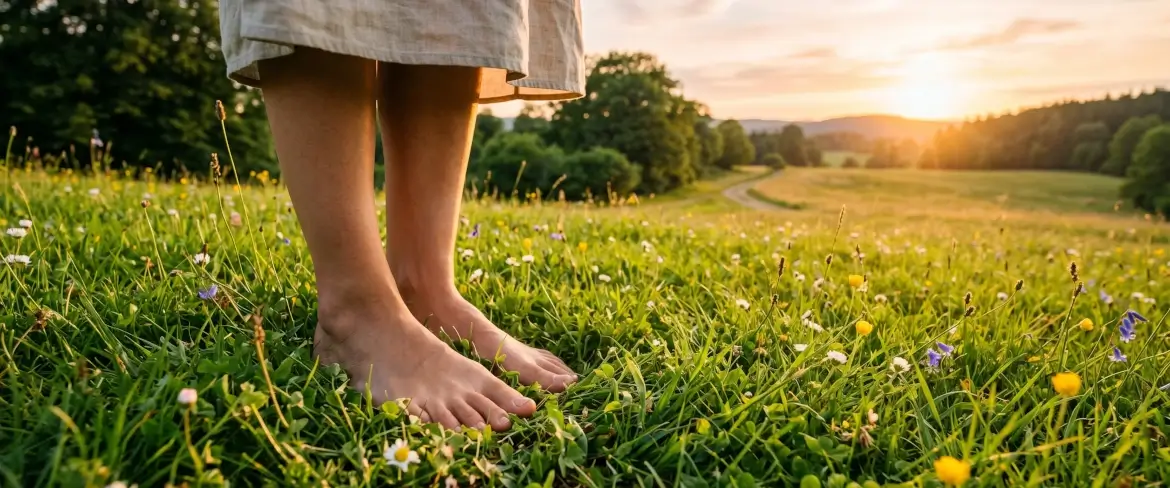
Let us remember that the solstice is a festival inextricably linked with Mother Earth. The most beautiful and authentic form of celebration is simply being outside. Go to the forest, a wild meadow, by a lake, and if you live in the centre – to a nearby park. Take off your shoes (if it is safe) and walk barefoot on the grass.
This is a practice known as earthing, which wonderfully regulates the nervous system, reduces stress, and allows you to literally absorb negative charges from the earth, neutralising free radicals. Turn off your phone for this time. Observe the intense green of the leaves, listen to the singing of birds, take a deep breath, and feel that you are an integral, very important part of this powerful, vibrant ecosystem.
"We are children of nature. When we slow down our pace and listen to its rustle, we remember that the most powerful magic lies in simplicity and mindful presence in the here and now."
How to use the energy of summer after the solstice?
Although the culmination occurs on one specific June day, the magic of the summer solstice does not disappear like the touch of a magic wand exactly at the stroke of midnight! This cosmic moment winds up the wheel of nature for the coming, warm weeks. How to keep this vital spark within yourself for longer?
Bring the sun into your everyday life. Introduce into your morning routine even a few minutes of meditation with sunny affirmations (e.g., "I radiate inner light and courage", "With each day I open myself to summer abundance"). An excellent idea is also to create a small, summery altar on a chest of drawers at home. Place a dried wreath or a bouquet of wildflowers there, a favourite mineral (e.g., sunstone), and a yellow candle. When you feel an unexpected drop in motivation in the coming months, simply sit by this place, light the flame, and remember the power and warmth of this brightest day!
Why is it worth celebrating the summer solstice?
In today's constantly rushing world, we rarely give ourselves permission to take a real break and a breath. The summer solstice – regardless of whether you look at it through the prism of the ancient Kupala Night, the Christian midsummer night, or simply the astronomical welcoming of the warmest season of the year – is an excellent excuse to stop for a moment. Why is it worth consciously inscribing these summer celebrations into your annual calendar?
- ✔️ Slowing down and returning to tradition: by discovering ancient rites, we connect with the knowledge and experience of our ancestors. We realise that although times and technologies change, our basic, human needs – the desire for love, health, abundance, and joy – remain exactly the same.
- ✔️ Deep contact with nature: summer rituals literally pull us out of our homes and tear our eyes away from screens. They remind us that we are an inseparable part of a larger ecosystem and encourage us to draw vitality straight from the earth, the life-giving sun, and blooming plants.
- ✔️ Living with intention: each magical practice teaches us focus and mindfulness. When we slow down, pinpoint our desires, clear our space of what does not serve us, and give thanks for what we already have, we begin to create our reality in a fully conscious way.
Celebrating the longest day of the year is a powerful lesson for us. It reminds us that, like the Sun and the Moon, we too are subject to natural, cosmic cycles. We have our time in life for intensive growth and courageous action, but for the true harvest to arrive, we also need a bit of warmth, rest, and moments of joyful oblivion. It is worth opening up to this extraordinary, vibrating June energy and letting it guide us with lightness through the entire second half of the year!
May the glow of the summer sun illuminate your path, give you infinite vitality, and help you realise your most beautiful, magical intentions. Have a wonderful solstice!
FAQ – questions asked about the summer solstice and related rituals
1. What is the summer solstice?
What is the summer solstice from a scientific point of view? It is an astronomical phenomenon during which the Sun reaches its highest point in the sky relative to the equator in its annual journey. For inhabitants of the Northern Hemisphere, it marks the official beginning of astronomical summer.
2. When is the summer solstice?
If you want to know when is the summer solstice, you need to look at the calendar at the end of June. Most often, this phenomenon falls between the 20th and 22nd of June, and the exact date depends on the occurrence of leap years and subtle changes in the Earth's orbit.
3. Why is the summer solstice the longest day of the year?
This is due to the tilt of the Earth's axis to the plane of its orbit. At the moment of the summer solstice, our hemisphere (the northern one) is maximally tilted towards the Sun. Thanks to this, the sun's rays fall on it at the greatest angle, and the Sun is visible in the sky for the longest time, which gives us the longest day of the year.
4. How long does the longest day of the year last?
The longest day of the year lasts on average from 16 hours and 12 minutes up to 17 hours and 20 minutes (depending on the region). This difference is due to latitude – the further north, the longer the summer day is.
5. What is Kupala Night?
For many people, Slavic spirituality is fascinating, so they often ask: what is Kupala Night exactly? It is an ancient, pre-Christian festival associated with the summer solstice and the shortest night of the year. Our ancestors worshipped the elements (water and fire) during this time, and the night itself was a joyful celebration of love, fertility, and harvest.
6. When is midsummer night?
The Christian midsummer night, which was formerly the church's response to the pagan rites of Kupala Night, has a fixed date. It is always celebrated on the eve of St. John the Baptist's day, which is the night of the 23rd to the 24th of June.
7. What does fire symbolise during the summer solstice?
In ancient traditions, fire symbolised powerful vital force and the life-giving Sun. It was believed to have extraordinary protective and transforming properties. Jumping through flames during the June nights was intended to burn away illnesses, cleanse the aura, and protect against negative energy for the entire second half of the year.
8. What are the simplest summer solstice rituals?
The simplest ways to celebrate include lighting a candle (preferably yellow or gold) with the intention of attracting abundance. It is also worth considering cleansing the space with white sage or palo santo, creating wreaths of wildflowers, and taking grounding barefoot walks on the grass to recharge with the energy of Mother Earth.
Recommended

Palo santo incense + white sage bundle set
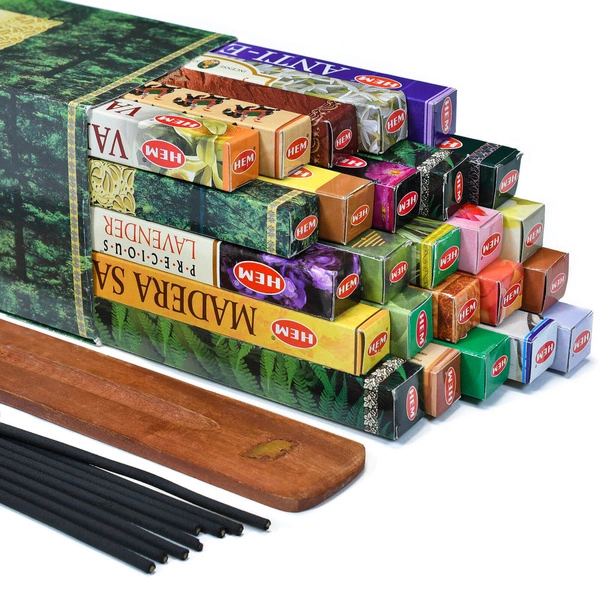
HEM Incense Sticks mix + Wooden Stand
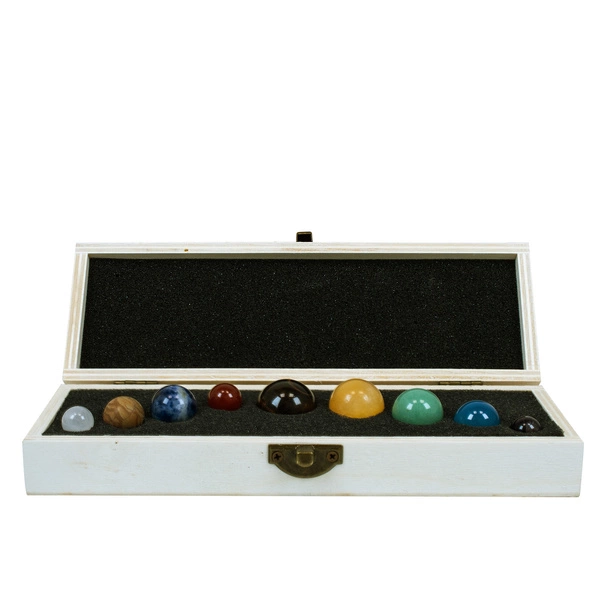
Set of natural stones "The Nine Planets’"– in a wooden box
