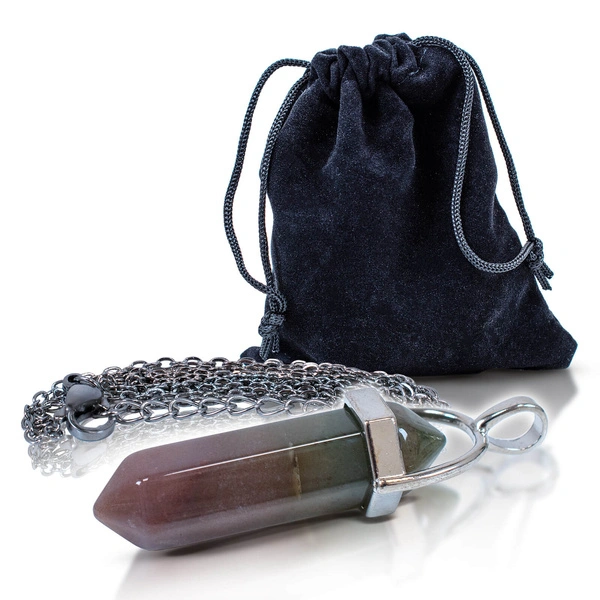
Agate – properties, types, colours and meaning of the stone
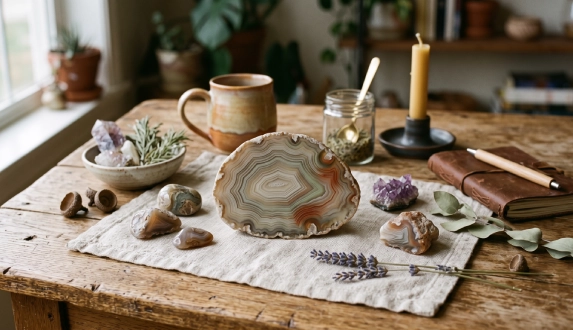
Few gemstones in the mineral world are as intriguing, layered and mysterious as agate. This remarkable agate stone captivates with its banded patterns, grounding energy and seemingly endless palette of colours. It has fascinated those seeking harmony for centuries and remains one of the most popular amulets in lithotherapy. Its presence in the surrounding space may serve as a gentle reminder to seek inner calm, particularly during moments of everyday overstimulation. A true gift from deep within the Earth, agate subtly evokes our enduring connection with the natural world.
Whether you are taking your first steps into the fascinating world of esotericism or already have a well-established home collection of minerals, this many-layered crystal is well worth getting to know. Each distinctive layer and colour may be interpreted as carrying a slightly different frequency, so it is useful to understand how to work with its symbolic potential. Read on to discover the properties of agate, how to recognise it, what it is made of and what meaning and symbolism have been associated with it in ancient and contemporary spiritual traditions. Exploring this mineral can become a fascinating journey, enriching a mindful grounding practice.
Table of contents:
- What is agate?
- What does agate look like?
- Key features of natural agate
- Types and varieties of agate
- Agate colours
- Agate – physical properties
- Agate – meaning and symbolism
- How to care for agate?
What is agate?
From a scientific and geological point of view, agate is a particularly fascinating variety of chalcedony, which is itself a microcrystalline variety of quartz. This remarkable mineral is distinguished by its banded, layered structure, formed over thousands or even millions of years. It most commonly develops in cavities and fissures within volcanic rocks, where silica-rich solutions are deposited slowly, layer by layer. This rhythmic geological process creates the striking geometric or flowing patterns through which the agate stone is recognised as one of nature’s most beautiful creations.
When exploring stones and crystals as part of a spiritual journey, one fundamental principle quickly becomes clear: nature does not create duplicates. The changing conditions under which this mineral forms mean that no two specimens are exactly alike. Even pieces from the same geode will differ in the width of their bands, the intensity of their colours and their level of translucency, creating a completely unique pattern.
💡 Did you know? The name “agate” comes from the ancient Greek name of the river Achates, now known as the Dirillo, in Sicily. According to ancient philosophers and scholars such as Theophrastus, this was where these intriguing, layered minerals were first mined.
Although the mineral is composed mainly of silicon dioxide (SiO₂), its remarkable visual variety is due to small amounts of other elements, such as iron, manganese and chromium. These act as natural pigments, colouring individual layers in an almost endless range of shades. In lithotherapy, this physical layering is sometimes understood as reflecting the many dimensions of human nature and is associated with harmonising different aspects of everyday life.
📌 In brief: what is agate and how is it formed?
- ✔️ Mineral classification: a variety of chalcedony belonging to the quartz group.
- ✔️ Structure: a distinctive layered, banded formation created by the rhythmic deposition of silica in rock cavities.
- ✔️ Origin: agate most commonly crystallises in volcanic cavities, forming geodes.
- ✔️ Uniqueness: every piece of natural agate has a completely individual pattern that cannot be perfectly copied or predicted.
What does agate look like?
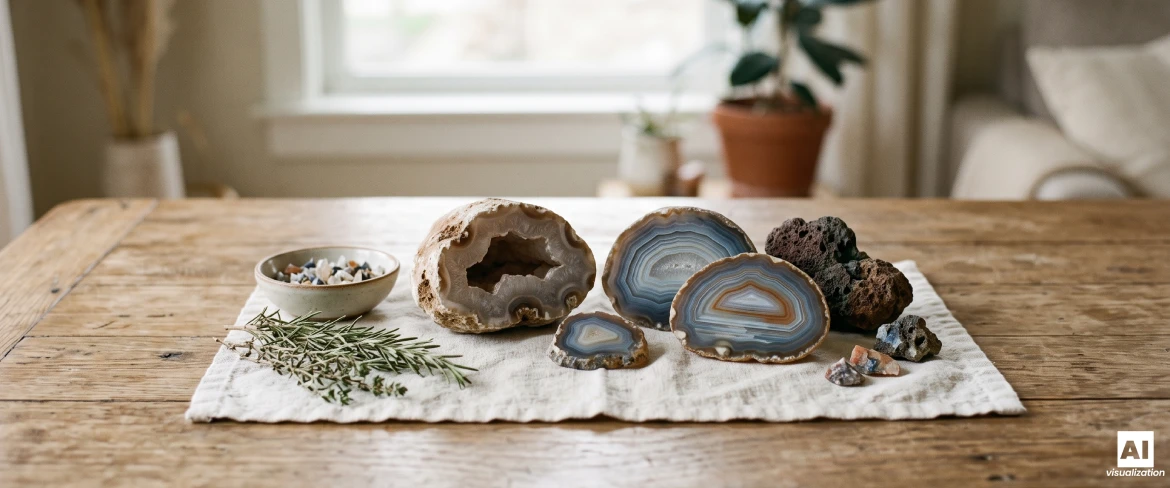
When considering what agate looks like, it is worth imagining a canvas on which nature has painted millions of years of geological history. The first feature to catch the eye is its distinctive banded structure. Multicoloured layers flow into one another, forming irregular, often undulating patterns that may resemble the rings of an ancient tree, ocean waves or fantastical geometric labyrinths. Once carefully cut and polished, the stone develops a delicate waxy or glass-like lustre, bringing greater depth to its intriguing character.
It is worth remembering that every specimen of this mineral is completely unique and one of a kind. Even two pieces cut from exactly the same geode will display entirely different patterns, making them fascinating objects for meditation and energy work. Their degree of translucency can also vary: naturally occurring specimens range from fully opaque stones to semi-translucent varieties through which light gently passes, revealing further bands hidden within the mineral.
🔍 The main visual features of agate
- ✔️ Banded structure: distinct, multicoloured layers usually arranged in parallel or concentric formations, creating mesmerising lines.
- ✔️ Unique pattern: no two stones found in nature are identical; each has its own individual arrangement and natural ‘signature’.
- ✔️ Varying translucency: from dense, cloudy forms to varieties that allow sunlight to pass through delicately.
- ✔️ Lustre: raw mineral specimens may be matt, while processing gives them a beautiful waxy or glass-like sheen, making them ideal for esoteric jewellery.
The remarkable beauty and widespread popularity of this mineral mean that countless variants can be found on the market. Although each of the features described above reflects the stone’s unique character, it is useful to understand how to distinguish specimens shaped solely by natural processes from those altered by human intervention. The structure and colour of agate are sometimes modified to enhance its visual appeal and intensify its shades.
Before choosing a mineral for a personal spiritual practice or home collection, it is worth becoming familiar with its natural appearance. Understanding the features of an authentic specimen, including the possibility of subtle human treatment, allows for a more informed and mindful relationship with the stone. The following section explores the characteristics that may help when assessing natural agate and its individual varieties.
Key features of natural agate
Authentic natural agate captivates with its raw, understated form. When assessing a specimen, one of the most important features to consider is its irregular pattern. Unlike synthetic substitutes or heavily treated stones, natural specimens rarely display perfectly symmetrical lines or completely uniform bands. Their beauty lies in their asymmetry, visible inclusions and tiny ‘imperfections’ within the structure, all of which reflect the long geological processes responsible for their formation.
Colour is another important factor when assessing a stone’s appearance and treatment. The market offers specimens in vivid neon shades of pink, purple and blue, so it is sensible to approach such colours with a degree of caution. A particularly intense or unnaturally bright shade does not necessarily mean that the stone formed this way deep within the Earth; it is often the result of artificial dyeing. This treatment is used to enhance the stone’s decorative appeal, while untreated agate usually displays softer, more muted and earthy colour transitions that blend gently into one another. Treatment does not make a stone worthless, but it is important that its finish is accurately described.
🔍 How to assess a natural specimen
- ✔️ Irregular arrangement: bands and patterns are asymmetrical, and their width often changes gradually across the surface of the stone.
- ✔️ Subtle, earthy colours: untreated specimens commonly show shades of white, grey, brown, muted green and soft pastels; neon intensity may indicate dyeing.
- ✔️ Natural inclusions: small spots, formations of other minerals or tiny fractures visible in transmitted light may reflect the stone’s long geological formation.
- ✔️ Cool to the touch: like many minerals, raw agate may initially feel cool against the skin before gradually warming up. This alone does not confirm authenticity.
Understanding these subtle differences is a valuable introduction to the extraordinary diversity found within the agate family. Since nature never creates two identical specimens, it is easy to appreciate how many distinctive forms can develop under different geological conditions. Each variety of agate carries its own geological story, recorded in its patterns, colours and inclusions.
In the worlds of esotericism and collecting, the types of agate are usually grouped according to their characteristic patterns, dominant colours, mineral inclusions or place of origin. Some resemble miniature woodland landscapes, while others evoke frozen flames or delicate lacework. Exploring the many varieties of this mineral can reveal an astonishing wealth of forms. The next section introduces some of the most popular examples.
Types and varieties of agate
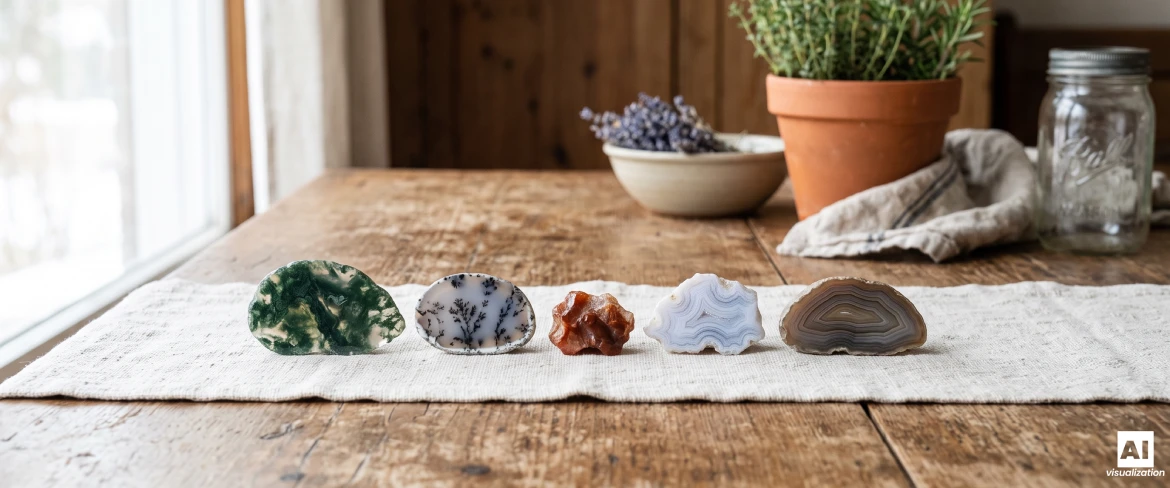
Looking more closely at this fascinating mineral, it quickly becomes clear that classifying its countless forms is no simple task. When it comes to agate, types and varieties are usually distinguished by their individual patterns, the presence of particular inclusions, dominant colours, place of origin or simply a popular trade name. Below are some of the forms most highly valued in the worlds of esotericism and collecting.
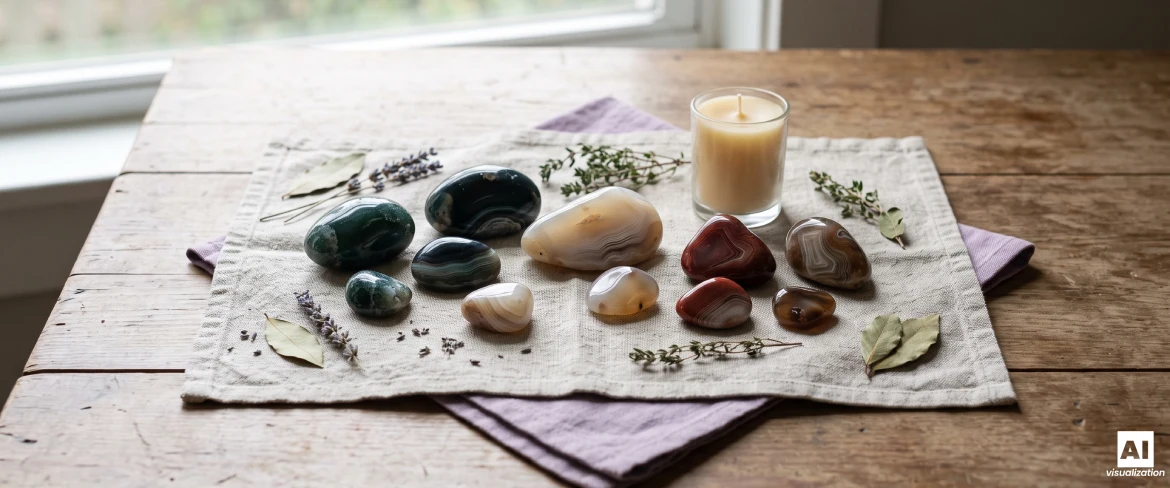
Moss agate
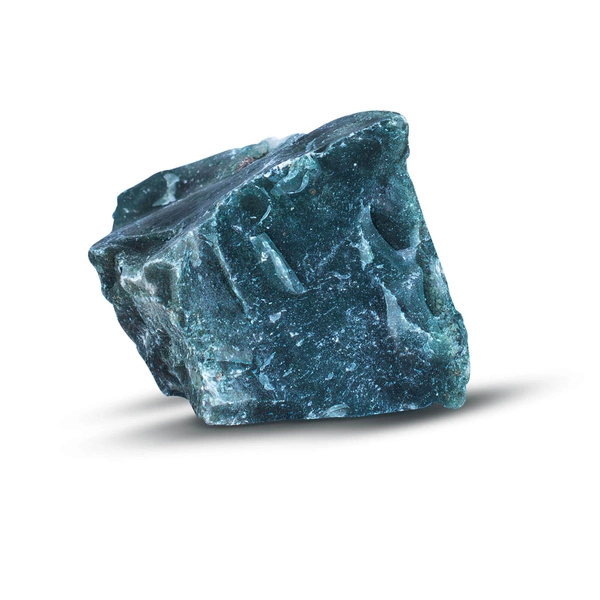
The remarkable moss agate may initially look as though fragments of woodland undergrowth have been permanently preserved inside the stone. It is characterised by green, brown or black inclusions that closely resemble moss, delicate branches or dense vegetation. These intricate patterns are not fossilised plants, however. They are the result of other minerals, most commonly chlorite or iron oxides, crystallising within the stone’s structure.
Dendritic agate
A close relative of moss agate is dendritic agate. Its defining feature is a network of dark, branching inclusions with almost fractal forms, resembling bare winter trees or delicate ferns. These striking formations develop when solutions rich in manganese or iron oxides slowly penetrate tiny fissures in the quartz, where they eventually settle and crystallise.
Fire agate
Highly valued in lithotherapy, fire agate is a true spark of warmth held within a cool stone. It is distinguished by deep shades of red, orange and brown, but its reputation comes chiefly from its fascinating optical effect. The mineral’s particular layered structure means that, when positioned at the right angle to a light source, shimmering three-dimensional reflections appear inside it, closely resembling dancing flames.
Lace agate
For those drawn to delicate patterns and a gentle visual character, lace agate can be an excellent choice. As its name suggests, its layered structure forms intricate, flowing and exceptionally fine lines reminiscent of finely woven lace. It occurs in a wide range of colours, but it is this highly decorative pattern that makes it one of the most popular varieties for esoteric jewellery.
Botswana agate
This elegant variety of agate takes its name directly from the African country where it is widely found. Botswana agate is known for its remarkably regular, closely spaced bands and its subtle, sophisticated palette. Shades of grey, brown, muted pink, cream and white are particularly common. The name primarily refers to the stone’s location of origin, while its distinctive and calming appearance has contributed greatly to its popularity.
Fortification agate
A fascinating example in the geological world of silicate minerals, fortification agate is distinguished by sharp, angular and strongly concentric bands. Unlike the soft, flowing lines seen in other varieties, these formations resemble ancient fortification plans or the outlines of thick defensive walls. Careful cutting and polishing brings out this striking geometric structure, making it especially decorative.
Feather and flower agate
These two particularly poetic names – feather agate and flower agate – describe specimens in which natural inclusions have formed patterns resembling blossoming flower buds or soft, drifting feathers. As with moss and dendritic forms, these are mineral formations embedded in translucent chalcedony. Geologically, they do not represent completely separate minerals; their names refer primarily to the stone’s appearance and highlight the beauty concealed within the raw material.
Indian agate
The widely available Indian agate is a name that usually refers to the material’s geographical origin or to a popular trade name used for easy identification. It is typically characterised by an impressive variety of colours and patterns, ranging from deep green and warm brown to delicate cream shades. It is worth noting that Indian agate does not describe one strictly defined mineralogical variety. This naturally varied combination of colours and patterns makes it a versatile choice for everyday amulets.
📌 Agate – a diverse family of varieties. How can they be classified?
Although the agate family seems almost endless, its varieties can broadly be divided into two distinctive visual categories:
- ✔️ Banded varieties: such as Botswana, lace and fortification agate, recognised by their classic layered structure and clearly visible multicoloured lines.
- ✔️ Inclusion-rich varieties: such as moss, dendritic and flower agate, in which the main visual feature is formed by mineral ‘images’ embedded in silica, often without regular banding.
Agate colours
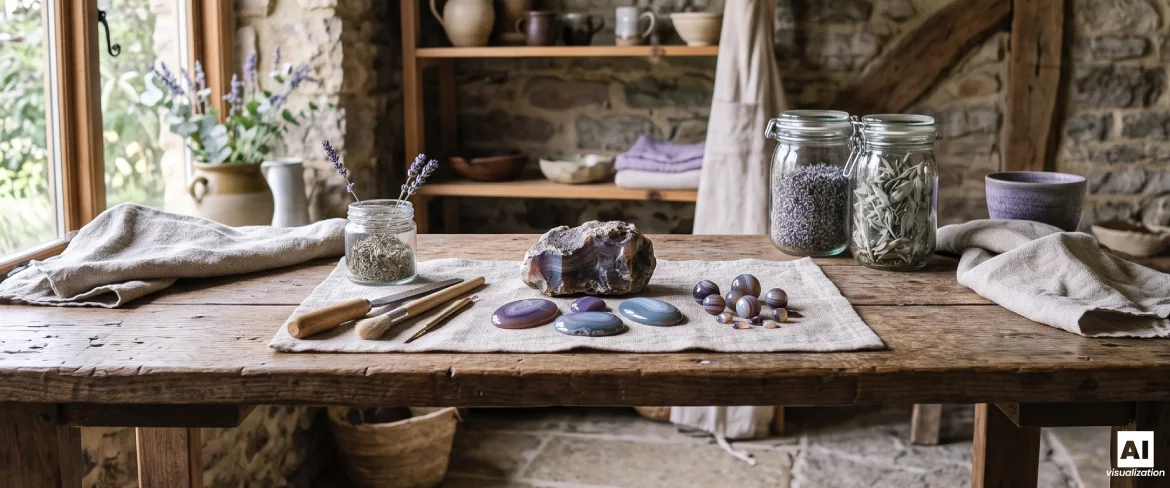
When exploring the fascinating world of minerals, it quickly becomes clear that agate colours span almost the entire palette found in nature. From deep black and fiery reds to ethereal blues and snowy white, the variety is truly remarkable. A stone’s final shade depends primarily on the conditions in which it formed and on the presence of particular mineral impurities, such as iron, manganese, chromium or nickel. Treatment processes should also be taken into account. As chalcedony has a microcrystalline, slightly porous structure, it has been successfully dyed for centuries. Although this process can beautifully enhance its banding, it is useful to know which colours are natural and which result from human intervention.
Green agate
When it comes to minerals associated with harmony, green agate is often considered one of the most appealing choices. Its natural shades can range from muted moss green and deep bottle green to delicate pastel tones. In nature, this colour is commonly linked to the presence of chlorite or particular iron compounds, while some specimens also display intriguing plant-like inclusions. However, vivid neon or emerald-green saturation should be approached with caution, as it is almost always a sign that the crystal has been deliberately dyed during treatment.
Blue agate
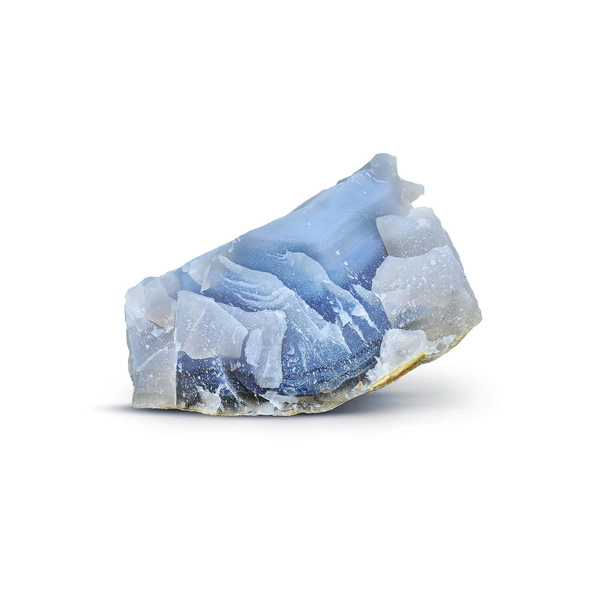
Highly valued in calming and meditative practices, blue agate evokes a peaceful sky or gentle ocean waves. Naturally occurring specimens from this family tend to have a soft, muted colour palette, with cool grey-blue or almost icy tones arranged in subtle patterns. It is worth remembering that stones with an exceptionally intense cobalt or navy-blue colour are often treated or dyed to create a stronger contrast between their individual layers.
Black agate
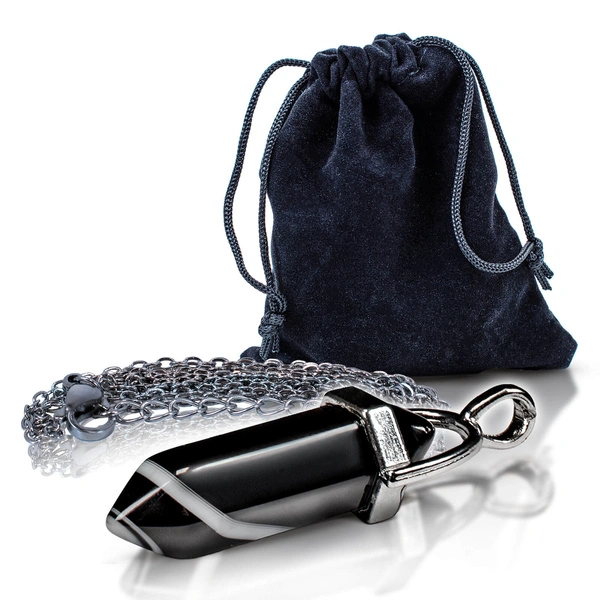
Often regarded as a symbol of protection and strong grounding, black agate is an elegant stone with a deep, dark appearance. Once carefully cut and polished, it develops a beautiful glass-like lustre. Subtle lighter bands in shades of grey, white or brown can often be seen within its structure. Although naturally dark specimens do occur, some agates are darkened in jewellery making, for example using sugar solutions, to achieve an intensely rich, almost jet-black colour. Treated in this way, the stone works beautifully as a personal amulet in everyday jewellery.
White agate
Often associated with innocence, purity and spiritual light, delicate white agate is admired for its milky, creamy or almost snow-white tones. It is frequently translucent, and light can reveal a natural, mesmerising pattern made up of grey, pearly or pale brown bands. Thanks to its gentle appearance, this variety of mineral sits beautifully within a space, bringing a soothing and restful atmosphere.
Red and brown agate
The warm, fiery and earthy shades of this mineral are largely due to iron oxide inclusions held within the quartz structure. The palette is exceptionally rich and warming, ranging from brick and rusty red through vivid orange to deep mahogany and rich chocolate brown. These stones often display pronounced, dense banding. In an esoteric context, such crystals are traditionally associated with vitality, motivation and the courage to bring intentions into reality.
Natural agate colours and mineral inclusions
| Dominant shade | Elements responsible for the colour | Lithotherapy associations |
|---|---|---|
| Red and brown | Iron oxides | Vitality, courage, physical strength |
| Green | Chlorite, trace amounts of iron | Growth, abundance, harmony |
| Blue and grey | Copper, pure chalcedony | Calm, communication, tranquillity |
| Black | Carbon, manganese, iron | Energetic protection, grounding |
Agate – physical properties
Beauty and an endless variety of colours are not the only reasons why this mineral has fascinated people for centuries. From a jewellery-making and geological perspective, its technical characteristics are just as impressive as its appearance. To fully appreciate this remarkable gift from nature and understand why it is so well suited to everyday amulets, it is worth taking a closer look at its physical properties.
One of the main features considered when assessing a mineral’s practical uses is its hardness. In the case of this microcrystalline variety of quartz, it ranges from 6.5 to 7 on the ten-point Mohs scale. This means that the stone is highly resistant to scratches, abrasion and everyday mechanical damage. It can scratch some types of glass, while remaining resistant to many hard objects itself. This durability, combined with the absence of cleavage – the tendency to split along specific planes – makes agate a long-lasting material that is well suited to cutting and polishing.
The physical characteristics of agate
| Parameter | Value / Description |
|---|---|
| Hardness (Mohs scale) |
6.5–7 (high resistance to scratching) |
| Density | Approx. 2.58–2.64 g/cm³ |
| Transparency | Opaque to translucent |
| Lustre | Waxy or matt when raw; glass-like when polished |
| Cleavage | None (conchoidal fracture) |
When the question arises as to why this mineral is so often used in jewellery workshops and incorporated into beautiful esoteric jewellery, the answer lies not only in its durability but also in its remarkable ability to take a high polish. A rough piece fresh from the ground may appear matt, coarse and unremarkable. After professional cutting and polishing, however, it reveals a beautiful glass-like lustre that brings out the depth of the patterns hidden within. This makes agate an excellent material for smooth cabochons, faceted beads and distinctive decorative pieces designed to be enjoyed for many years. These physical qualities form the basis of what can be described as agate stone properties.
💡 Worth knowing: Thanks to its considerable hardness and distinctive layered structure, this mineral was used in antiquity for carving intricate cameos and making signet rings. Wax did not adhere easily to its smooth, polished surface, making it well suited to sealing important documents and allowing it to combine the role of a protective amulet with that of a practical everyday object.
Agate – meaning and symbolism
Since the dawn of history, minerals have fascinated people not only with their appearance but also with the energy believed to reside within them. When exploring the esoteric potential associated with agate, the agate stone meaning found in different cultures is rich and varied, often centred on the idea of balance. For centuries, agate has been regarded as a powerful amulet associated with emotional stability, mental balance and deep calm. It is important to emphasise, however, that these beliefs have cultural, historical and spiritual roots. Although working with crystals can be a meaningful part of holistic personal development, their effects have not been scientifically proven and should never replace conventional medical care or treatment.
In some ancient traditions, from Babylon and Egypt to classical Greece, the layered structure of this mineral was believed to reflect the many dimensions of the human soul. Each band was thought to symbolise another stage of self-discovery and the gradual, harmonious process of personal growth. For this reason, the stone became associated with seekers of truth and was believed to offer protection from negative outside influences and help dispel fear. Its grounding symbolism was also linked with keeping a clear mind in stressful situations, bringing together spiritual reflection and practical, rational thinking.
Contemporary lithotherapy and meditation practices continue to draw on these ideas. Some believe that wearing a crystal close to the body creates a subtle energetic shield that helps keep chaos at bay and brings a sense of order to the aura. This is one reason why jewellery featuring agate remains so popular in everyday life. A carefully chosen ring, necklace or bracelet can be both an attractive accessory and a symbolic grounding anchor in a world full of constant stimulation. In this spiritual context, these traditions shape the commonly discussed properties of agate.
🔮 The symbolism of agate in esoteric traditions
- ✔️ Balance of Yin and Yang: harmonising opposing energies and bringing together masculine and feminine principles, light and shadow.
- ✔️ Energetic protection: creating a safe, grounding space and symbolically separating oneself from negative or draining influences.
- ✔️ Stability and calm: easing inner tension, supporting the management of anger and stress, and encouraging clear, logical reflection.
- ✔️ Personal development: the layered structure serves as a reminder of the gradual, patient discovery of one’s own potential, without haste or unnecessary pressure.
How to care for agate?
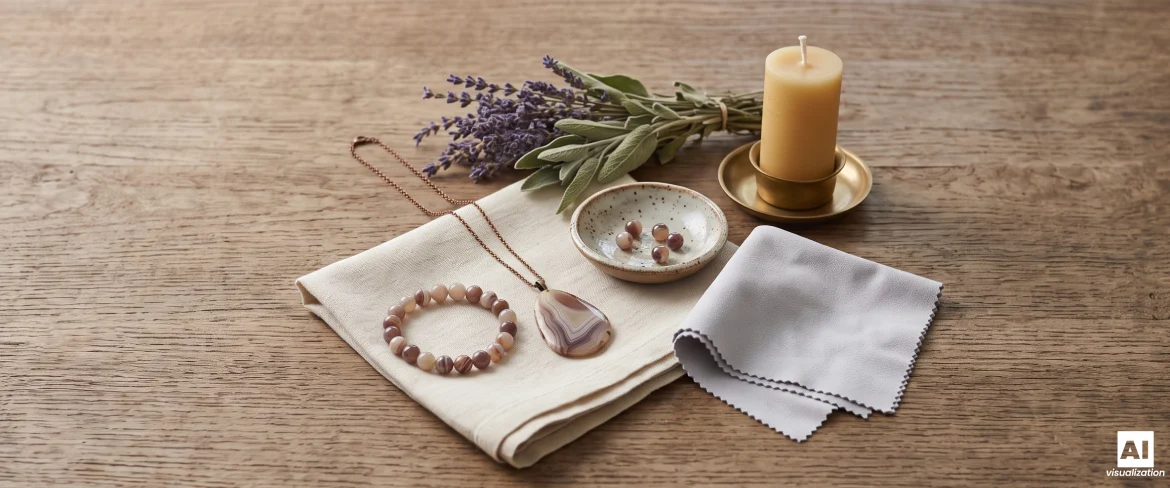
Although the mineral described here is relatively hard, proper care is essential for preserving its natural beauty for many years. To keep the crystal’s distinctive lustre and intriguing banding looking their best, it should be handled with care. A soft cloth and lukewarm water are ideal for regular cleaning. Strong detergents, harsh chemicals and ultrasonic cleaners should be avoided, as they may permanently damage the stone or its setting. Due to its structure, agate can also be sensitive to sudden temperature changes, so it is best protected from abrupt cooling or intense heat, which may cause tiny fractures.
When a treasured specimen becomes part of a home collection, the energetic qualities associated with the agate stone properties can be tended to with the same care as its physical form. Beyond removing everyday dirt, amulets used in lithotherapy are traditionally believed to absorb surrounding vibrations and may therefore be symbolically reset from time to time. Further guidance on safely cleansing a stone’s aura using natural incense smoke, moonlight or sound can be found in the dedicated article: How to purify stones and crystals? A guide for everyone.
📌 Agate care – in brief
- ✔️ Washing: use only lukewarm water and a soft cotton or microfibre cloth.
- ✔️ Protection: remove jewellery before cleaning, swimming or applying cosmetics such as hairspray or perfume.
- ✔️ Storage: keep agate in a soft fabric pouch, away from harder minerals such as quartz or diamonds, to prevent accidental scratches.
- ✔️ Temperature: avoid leaving the stone in strong sunlight or close to powerful sources of heat.
This remarkable gift from the Earth is undoubtedly more than just a beautiful ornament. Its many-layered structure makes it a meaningful companion in everyday life, gently reminding us of the search for inner harmony, helping to create a sense of grounding and encouraging a steadier connection with the present moment. Whichever variety or colour draws the eye, working with agate as a symbolic grounding stone may bring a sense of calm to a personal spiritual practice.
Immerse yourself in the grounding energy of nature and find the crystal that resonates with you.
FAQ – frequently asked questions about agate
1. What is agate?
Agate is a microcrystalline variety of quartz, more specifically a variety of chalcedony, which forms in cavities and fissures within volcanic rocks. It is distinguished by its unique layered structure and remarkable range of colours. For centuries, it has been valued in both jewellery making and lithotherapy.
2. What does natural agate look like?
Its most distinctive feature is its banded structure, in which multicoloured layers flow into one another to create irregular, undulating or concentric patterns. Naturally occurring stones may be completely opaque or slightly translucent, while cutting and polishing can give them a beautiful waxy or glass-like lustre.
3. How can you recognise genuine agate?
Authentic mineral specimens may feel cool to the touch before warming against the skin, and often display asymmetrical bands, natural inclusions and small imperfections. It is worth being cautious with stones in vivid neon colours, such as intense pink or unnatural blue, as these are often artificially dyed. Coolness alone is not proof of authenticity.
4. What are the most popular types and varieties of agate?
The most popular varieties include moss agate, dendritic agate, fire agate, lace agate, Botswana agate, fortification agate and Indian agate. They are generally distinguished by their characteristic patterns, mineral inclusions and particular colour palettes.
5. What is the difference between moss agate, dendritic agate and fire agate?
Moss agate contains inclusions, such as chlorite, that resemble woodland moss. Dendritic agate is distinguished by dark, branching inclusions reminiscent of winter trees. Fire agate, meanwhile, is known for its deep rusty shades and an optical effect resembling shimmering, three-dimensional flames.
6. What colours can agate be?
Natural agate occurs in a rich earthy palette, from white, grey and cream through muted shades of green and blue to warm browns, reds and deep black. Its colouring may be influenced by trace elements such as iron, manganese and chromium, as well as by inclusions, formation conditions and, in some cases, dyeing.
7. What are the properties of agate?
In esoteric traditions and lithotherapy, agate is regarded as a grounding stone associated with balance and stability. Its symbolic energy is believed to support emotional steadiness, ease stress, encourage clear thinking and act as a protective reminder against negative outside influences. These are cultural and spiritual beliefs rather than scientifically proven effects.
8. Which hand should you wear an agate bracelet on?
Some energy-based practices use a symbolic distinction between the two hands. Wearing a mineral on the left hand is traditionally associated with receiving its calming symbolism and turning inwards, while wearing it on the right is associated with expressing protective intentions in interactions with the surrounding world. There is no scientifically established rule, so the most comfortable and meaningful option is the best choice.
9. Which zodiac sign is agate most suitable for?
In some astrological traditions, agate is associated particularly with Gemini, Taurus and Virgo. It is said to support concentration and a sense of inner calm, but these associations are symbolic rather than scientifically verified. The stone can be chosen according to personal preference, regardless of zodiac sign.
10. How should you care for agate and jewellery made with this stone?
Clean agate with lukewarm water and a soft cloth, such as microfibre. Avoid strong chemicals, ultrasonic cleaners and sudden changes in temperature. To prevent scratches, store agate jewellery separately in a soft fabric pouch, away from harder stones and sharp objects.
Recommended
Agate (raw stone) 1 pc.
Pendant with black agate in pouch + chain
Moss Agate (raw stone) 1 pc.